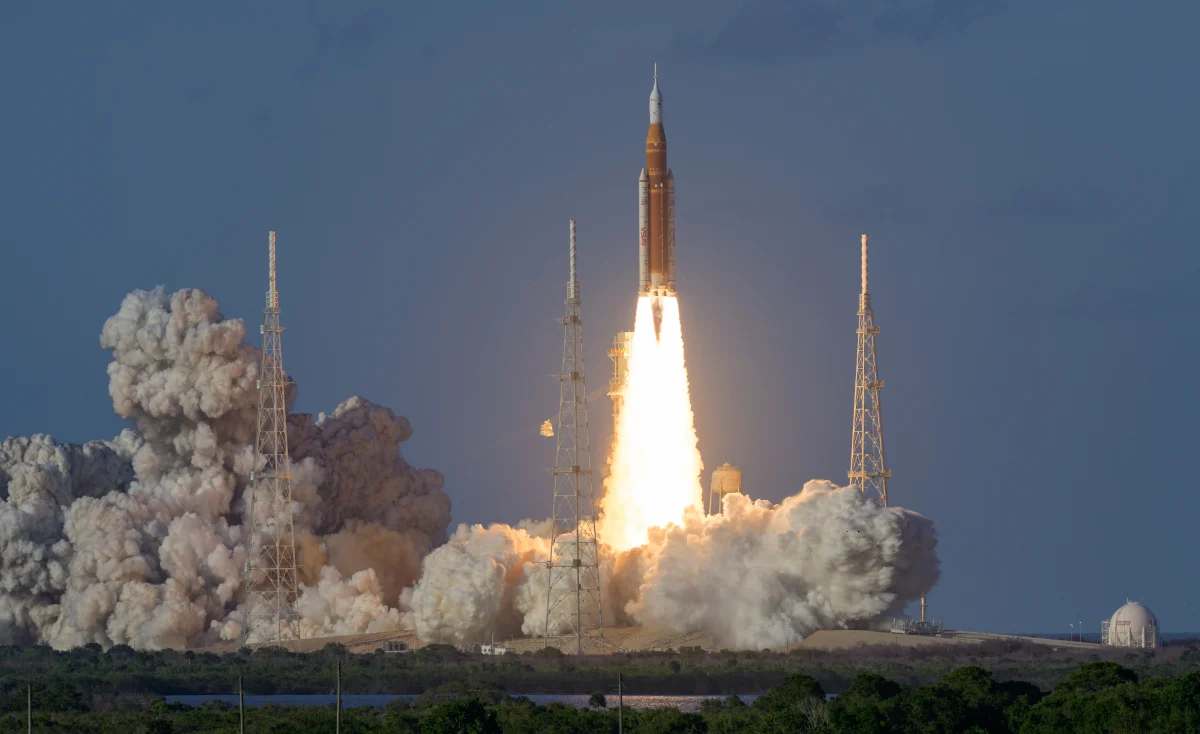
NASA’s Artemis II crew successfully returned to Earth, splashing down on April 10, 2026, completing a historic, nearly 10-day journey around the Moon and marking humanity’s first crewed lunar mission in over 50 years.
The mission marks the first time humans have traveled beyond low Earth orbit since 1972.
The mission began April 1, when NASA astronauts Reid Wiseman, Victor Glover, and Christina Koch, along with Canadian Space Agency astronaut Jeremy Hansen, lifted off at 6:35 p.m. EDT from Launch Complex 39B at Kennedy Space Center aboard the Space Launch System rocket.
The crew includes Commander Reid Wiseman, a Navy veteran and former chief of NASA’s Astronaut Office; Pilot Victor Glover, a Navy pilot and SpaceX Crew-1 astronaut who conducted four spacewalks and became the first person of color to travel to the Moon; Mission Specialist Christina Koch, an engineer who spent nearly a year in space in 2019 and completed six spacewalks, becoming the first woman to travel to the Moon; and Mission Specialist Jeremy Hansen, a former Royal Canadian Air Force fighter pilot making his first spaceflight and becoming the first Canadian to reach the Moon.
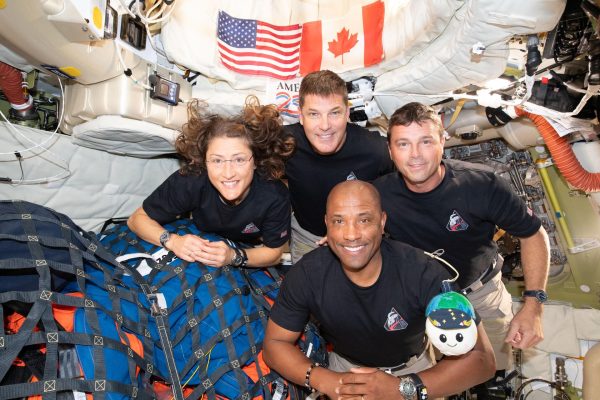
After reaching orbit, the Orion spacecraft separated and underwent system checks before being propelled toward the Moon. Over the next several days, the crew traveled through deep space, covering approximately 695,081 miles during the mission.
At its farthest point, Orion reached approximately 252,760 miles from Earth, about 4,105 miles farther than Apollo 13. The spacecraft passed within 4,070 miles of the lunar surface as it looped around the Moon and behind the lunar far side — the pass that caused a 40-minute communications blackout with Earth.
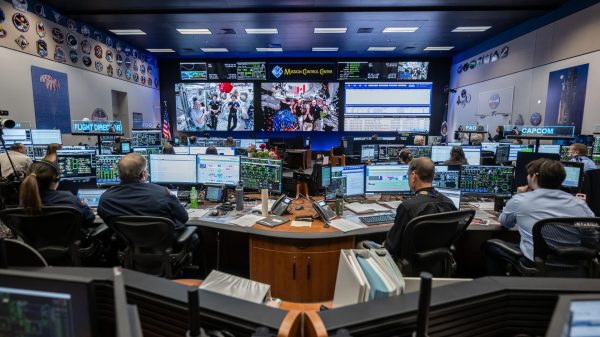
Throughout the mission, astronauts conducted a wide range of tests to evaluate Orion’s capabilities in deep space. They performed manual piloting exercises, monitored automated systems, and assessed the spacecraft’s life-support, propulsion, power, thermal, and navigation systems. The crew also carried out proximity operations, evaluated living conditions inside the capsule, and conducted science activities, including lunar observations and human health studies.
The mission served as a critical test of NASA’s ability to sustain astronauts beyond low Earth orbit. The crew practiced trajectory adjustments, tested communications at lunar distances, and validated emergency procedures and recovery operations.
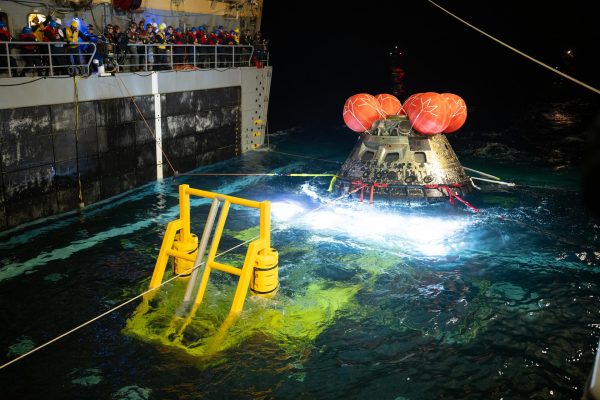
The return journey concluded with a high-speed reentry into Earth’s atmosphere at about 25,000 miles per hour. The mission used a “skip-entry” technique to safely navigate Earth’s atmosphere. Orion splashed down safely in the Pacific Ocean off the coast of California, where recovery teams retrieved the crew and capsule.
Artemis II made several historic firsts: Glover became the first person of color to travel to the Moon, Koch the first woman, and Hansen the first Canadian.
The mission also marked the first lunar flight to stream 4K video and provide live updates online. Real-time coverage continued throughout the mission on NASA’s YouTube channel, and a separate livestream of views from the Orion spacecraft was available online.
The mission is an important step in NASA’s Artemis program, which aims to establish a sustained human presence on the Moon and prepare for future missions to Mars. Officials say the success of Artemis II paves the way for Artemis III, which is expected to land astronauts on the lunar surface later this decade.