

Venezuelan President Nicolas Maduro was captured by US forces Jan. 3 in a United States military operation.
Maduro and his wife, Cilia Flores, are currently being held at the Metropolitan Detention Center in Brooklyn on narco-terrorism charges. President Donald Trump described the operation as “a large-scale strike against Venezuela and its leader,” following months of military buildup.
Maduro and Flores pleaded not guilty to conspiracy charges presented by the US government during their arraignment Monday, Jan. 5.
In the 25‑page indictment, US prosecutors alleged when Maduro first entered public office in 1999, he — along with Flores, his son Nicolás Ernesto Maduro Guerra, and three others — participated in a cocaine‑trafficking operation and worked with cartels designated as terrorist organizations.
The indictment claimed Maduro received millions in drug money through a laundering scheme tied to a narco‑terrorism network during his presidency.
It further accused him of overseeing and eventually leading a Venezuelan drug‑trafficking organization known as the Cartel of the Suns.
Additionally, prosecutors alleged that Maduro facilitated Venezuelan passports and diplomatic cover for aircraft transport for drug traffickers and money launderers, enabling them to repatriate drug proceeds from Mexico to Venezuela.
Prosecutors allege Flores, who was leader of Venezuela’s National Assembly, accepted hundreds of thousands of dollars in bribes. Alleged attacks were ordered against government and drug trafficking opposition.
Venezuela’s National Assembly stated that Maduro usurped power.
According to the State Department, more than 50 countries, including the United States, do not recognize Maduro as the legitimate leader of Venezuela.
Many Venezuelan residents and citizens celebrated the Trump administration’s intervention, while others condemned the operation’s interest in oil over the well-being of citizens.
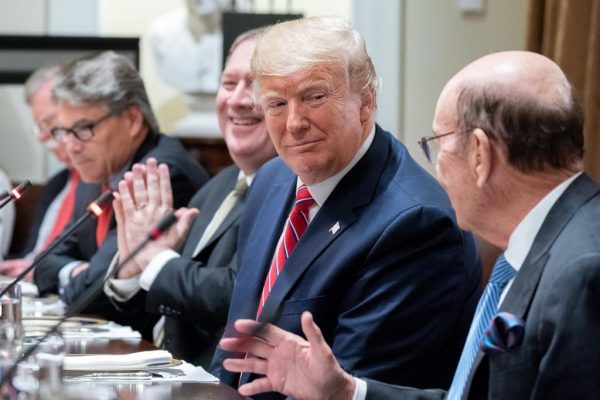
The case against Maduro is highly debated among experts. Several legal experts and multiple countries have criticized the Trump administration and questioned the operation’s legality, stating the capture violated the UN Charter and other international law.
The Trump administration said Maduro’s capture is legal through the Constitution and Maduro is not a legitimate leader.
On Jan. 3, Trump said the United States would run Venezuela indefinitely. Trump told reporters a second strike will be launched if Venezuela does not cooperate with the US to address drug trafficking and open its oil industry.
On Jan. 4, Secretary of State Mark Rubio said the United States is not at war with Venezuela nor seeks to govern the country.
The Trump administration intends to oversee Venezuela’s oil industry. Trump announced that Venezuela will turn over 30 to 50 million barrels of sanctioned oil. Proceeds from the oil sales will settle in accounts controlled by the United States.
In Venezuela, Maduro’s deputy, Delcy Rodriguez, who was sworn in as Venezuela’s interim president on Monday, expressed eagerness to collaborate with the United States.
Earlier this week, US forces seized a Russian-flagged oil tanker that was being shadowed by a Russian submarine, after pursuing it for more than two weeks across the Atlantic. US officials said it was part of Washington’s efforts to block Venezuelan oil exports.
Russia’s Ministry of Transport stated the vessel was outside any country’s territorial waters. According to US officials, both vessels were in the area, though their exact proximity remains unclear. There were no signs of a direct confrontation, and the tanker was seized for violating US sanctions.




CALEB HERRERA • Feb 26, 2026 at 2:41 PM
This article was interesting because it pulled together a lot of details about the situation and explained the different reactions clearly. It stayed organized even with so much going on, which made it easy to follow, good job.😃👍